
Let us be honest with one another. You’ve rarely given any thought to how the images at a live hockey tournament end up on the online platforms you visit.
At an IIHF event, images appear on social media channels within minutes of an intermission and the final buzzer.
One man providing those images home and away is Karl Denham, who has been a Great Britain team photographer since 2017.
He has been photographing GB women for eight years and performing that task in Dumfries, Scotland during the past week.
He kindly agreed to find ten minutes in his busy schedule for a chat. We discussed what goes into providing high-quality images that grace social media channels, websites and future articles.
The work for an IIHF tournament starts long before tickets are put on sale for the general public.
“When the tournament dates are announced and locations confirmed, Chris Ellis will get in touch to let us know the forthcoming arrangements. Then it’s a case of making sure I’m available to attend.”
“If the event is at a rink I’ve not been to before I’ll always try and scout the rink by looking online but generally the tournament host will produce a guide telling where we can and can’t go. In some tournaments, like an Olympic test event, we were told we had to stay in that one position in no uncertain terms, which makes it a little bit more difficult [to do my job].”
Everything is preparation and that was a prevalent theme throughout our conversation.
“For this tournament, I set my gear up two to three weeks beforehand. I work with Craig Simpson (GB media and comms) who needs video (for interviews) as well as images. So I have to set my camera for filming as I’m required to dabble in that field.”
“When we arrive 2-3 days before the tournament starts, we’ll start chatting to players, talking through the plans for the week and going over social media plans (we have Shannon Douglas here this week for social media). We discuss the kind of content we want to produce, and on what days and generally the whole week is planned ahead. We have ideas of what we want to do but then of course the tournament will inevitably throw surprises at you, so things can change on the fly.”
What Denham omitted from our chat is that all the headshots have be taken before the tournament. That is along with other images (often with humour involved) to be used for social media posts including goal announcements and the like.
“In terms of gear, I tend to take everything I need with me, so hopefully I’m never blind-sided by any situation. I do carry a 300m lens which is like a big telescope. That is handy if I end up somewhere where I’m up in the gods or required by the event rules to remain in a designated area.”
Working a home tournament isn’t an easier task than covering GB overseas.
As the host nation, Great Britain’s photographer provides images of every game for all competing nations and works for the IIHF.
“I get to the rink at least an hour before the first game and am here until at least 11 pm, so it’s easily a good twelve-hour day.”
“I averaged 1000 images a game in the past. I’ve just switched to a mirrorless camera, which shoots a lot faster. So I probably shoot a lot closer to 2000 a game and I’ll look to edit that down to 25-50 images of my best stuff.”
That’s up to 6000 images a day for those keeping count.

But how does Denham process that task so promptly and seamlessly to result in images appearing online within the confines of an intermission?
“A lot of years of practise. I’m a big fan of software called Photo Mechanic which shows you the images at 70% so it’s quicker to tap through them, rate the images, select the best ones, and then move those by bulk and then it’s about the speed of getting those.”
Having had the pleasure of spending time at two tournaments (including this one) with Karl Denham, he makes working hard look incredibly easy. Sustenance is taken on the fly as the commitment to work and his craft takes precedence. Just don’t mention overtime or shootouts to him or any other tournament photographer. That takes time out of an already busy schedule. With such a short turnaround between games and images of warm-ups required, the clock never moves slowly.
A rest day is the biggest misnomer in a hockey tournament.
“Rest days are nothing of the sort. We do team photos all day, starting at 6:45 am [requiring a very early start] and finishing around 4:30 pm. We then conduct filmed interviews for Great Britain. I edit on the fly all day and in some ways, it’s tougher than a normal game day. Generally, other nations will want some fun photos of gloves being thrown up in the air and the like. Australia asked for some drone footage one year, so we took that onto the ice and filmed above the team photo being put together in a time-lapse.”

The second rest day is a little easier as the pace slows somewhat toward the end of a tournament.
“The second rest day consists of putting together a video package We chat to the players in general asking how they think its gone. The video package normally encompassed two-three players and a couple of coaches. It’s quite a nice break from the tournament in a way.”
As with anything, life at an international hockey tournament can go wrong, with unforseen issues cropping up. Denham is quite philosophical about this and believes most issues can be headed off by good preparation.
“Touch wood I’ve never had a disastrous situation. Things that scare me the most would be a memory card issue or a camera breaking down but I’ve got backups of everything. Any photographers nightmare is dead batteries or that type of thing. So again, that comes down to good preparation, making sure you’ve got doubles of everything.”
“Wifi is typically one thing that can catch you out and does sometimes depends on where you are in the world. Sometimes you’ll have exceptional wifi coverage which makes things easy.”
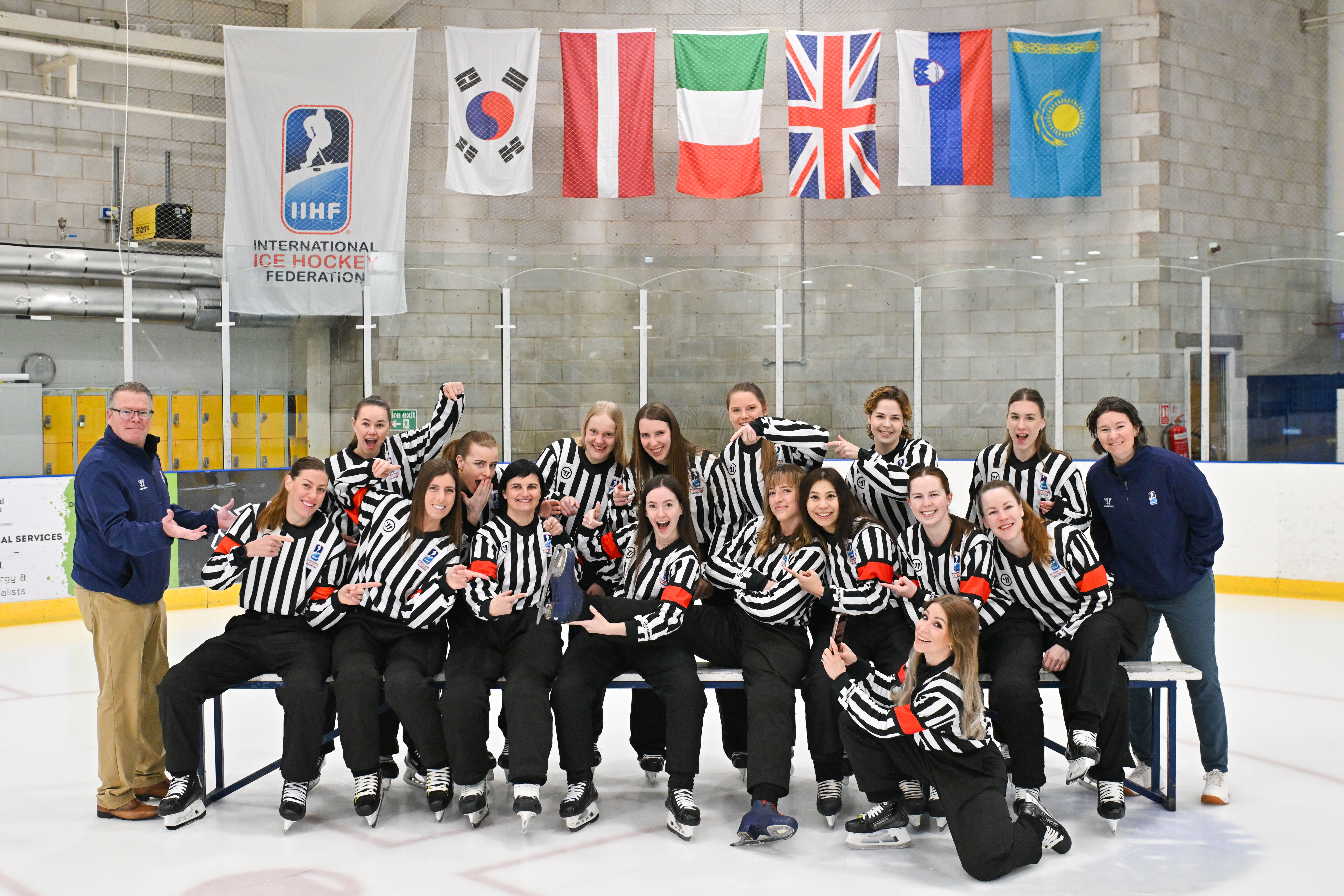
Dumfries is certainly one of the better venues for wifi coverage, and the rink has recently undergone an upgrade in that regard. The IceBowl isn’t the most glamerous or biggest rink in the world but it is incredibly well run and the human element is what makes it special. From the various staff to all the volunteers at an event, you won’t ever find more nice, helpful or kind people.
On the most enjoyable part of being a tournament photographer:
“It’s more the networking with people, especially Dumfries. It’s really good here and there’s a lot of nice people. When you come here it feels like you’ve come back to a second family.”
“I quite enjoy watching other nations play hockey and certainly enjoy watching Great Britain do well. It’s also the spirit of the game, they are always good tournaments. On a personal level, it’s travelling to places as well. This job has taken me to South Korea twice, Slovenia and Spain.”
My sincere thanks to Karl for his time, agreeing to this chat about his craft and for the use of his high-quality images this week and previous occasions.
If you have enjoyed this article, please consider supporting my work in the links below. No donation is too small, even if it’s just the cost of a coffee. It would be much appreciated. Thank you
 UK Hockey Blog