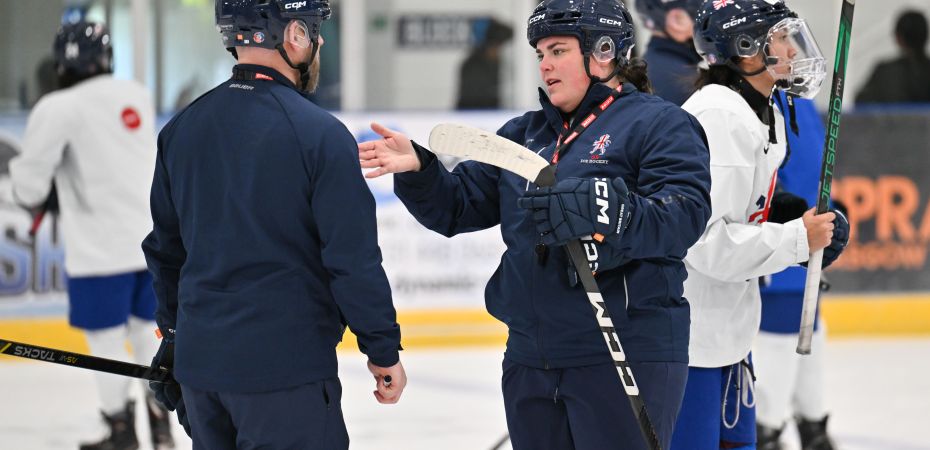
Changes are afoot in the Great Britain women’s program.
With a revamp behind the bench in full swing, Sean Alderson has taken the head coaching role in an interim role before Mike Clancy’s full-time successor is named.
The appointment of Beth Hanranhan as an assistant coach has turned heads given her coaching career and NCAA experience.
So what enticed the American coach to take a first job in the international scene with a smaller market nation?
“I think getting into the international scene is a cool aspect. The growth of the women’s game in North America has momentum and now it’s getting other countries to have that same kind of growth. Great Britain is putting some money into the program looking to get to that growth standpoint like North America so it’s a cool thing to be a part of, developing hockey and developing players.”
“For me, it’s all about developing players and working with them. I think that’s the best part of coaching, being face-to-face with players, that was more of my draw to come over and teach. I can also learn myself, so it is all-encompassing (in terms of the decision to join GB).”
“For the last three years at Brown, I’ve been working with the forwards, power play and 6v5 situations. Skill development-wise I’ve worked with all the players. I really do like being on the ice to work on individual skills. That is my main joy of coaching.”

The role won’t be full-time for the new assistant coach but plans to help Great Britain even when back in her native America.
“I hope I’m still involved in the NCAA and still getting paid! Right now I’m with Brown University and plan to continue to remain there. It’s nice to be able to do both roles.”
“I think you are always kind of recruiting, always planning, even where you’re not with the team, especially since we are only together for a two-week stint. You can’t just show up with a blindfold on and hope for the best. So I think having someone in North America is nice and a benefit. I can keep tabs on those players and potentially have touchpoints, depending on where they are located. The coaching community in North America is quite small as well so being able to communicate with my fellow coaches I’ve got good relationships with in Division I and III is helpful too. I hopefully will be a good resource for players who are interested in North America and getting those touchpoints for sure.”
When Hanrahan met with the squad for the first time it was a lot to take in at once but the GB interim head coach did his best to help with the fast track integration.
“Sean Alderson has been really good with helping me get to know the players before coming to camp. He sent headshots of all the players, their names and where they are looking to fit in the line-up. He has also taught me a lot about what club hockey here is like because I’m not too familiar with it.”
Not every player was a stranger, however.
“Chamonix Jackson I knew because she was at a Suny school and Ellin Rees plays at a club team [Newark Ironbound] in New York so I’ve seen her through the year.”
The 31 year old’s journey into coaching is perhaps not unexpected given the finances of the PWHL when she turned professional.
“It was an interesting time. I was living in New York City [Playing for the New York Riveters], earning 12,000 dollars a year making it tough to make ends meet. I got a really good opportunity to coach a prep school in Shattuck St Marys, so I took that as a sign to take the coaching route as that was something I’ve always wanted to do. A little part of me wishes I’d come over to Europe to play for a year or two but it all worked out in the end.”
The time playing at Providence and one year in the pro game has been invaluable as she’s been able to take that in her coaching roles with strong lessons learnt.
“Learning how to be a professional athlete. College prepares you for that very well I think. You are there six days a week, playing your sports, going to school full-time and time management. Time management, was the biggest thing, figuring out how to be a pro both in academia and sport.
Then bringing that into coaching, helping players to manage that as it is challenging, there’s a lot on their plate and they have to choose one thing over another and I’ve been through that experience.”
I spoke with the assistant coach after the opening two days with Great Britain having earned a solitary point and suffered an agonising overtime defeat to Korea. There were only positives to take as part of the process toward Great Britain women’s program getting stronger.
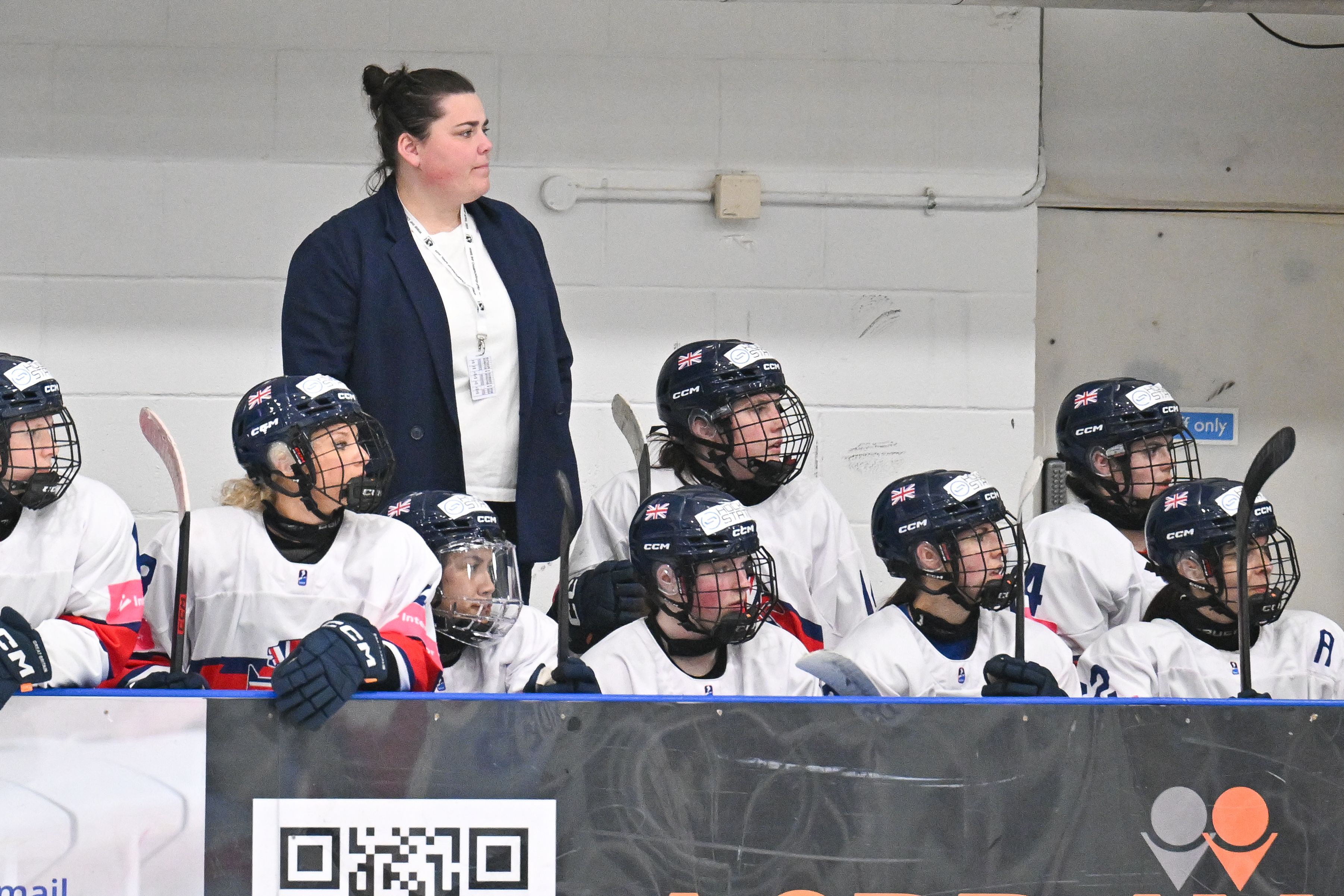
“I only saw some video before coming here and I think video always looks like the game is slowed down a little bit and not always the best quality of video at all times. I’ve been most impressed by the ability of our players to catch onto things we are teaching. We’ve changed a lot from our exhibition game against Italy and they have stuck to it, so that’s impressive.”
The sea-change being implemented within the program along with new coaches is toward playing a North American style of hockey.
I think it is [the correct way to play]. They [Great Britain] are playing aggressive fast hockey. I think that’s what you have to play. You have to be able to play a skill game and be physical to play at the top level. We’ve implemented some things. Each practice we are adding more and more net front battles, against the walls pinning, things like that. Transitions as well. I think the coaches and most importantly the players are doing a good job of implementing that.
“Back at Brown University, we do ten-minute video sessions. Here (with GB) we have to do two a day while trying not to bore them with two-hour sessions but we have to have more frequent touchpoints because it’s such a shorter frame of time. The players are all at different clubs, learning different things, so it’s about meeting with them to make sure we’re all on the same page regarding systems.”
The yet to be announced appointment of a head coach does leave the question open of who will be the assistants moving forward. That doesn’t faze the Maryland native who clearly wants to be a part of what Great Britain is trying to build.
“I think this was a great experience to get two weeks. I didn’t know what I was expecting, in terms of players, staff, and organisation, so I would like to be involved as I’ve created some relatively good relationships with the players and I’d like to see them develop in years to come.”
Speaking of relationships, Hanrahan is having to learn quickly about British hockey banter and learning some unfamiliar words and phrases.
“The banter is definitely different. I don’t know some of the words. I don’t know ‘knackered’, I haven’t used that word ever [laughs]. It’s been good though. Essentially they are just hockey players and we all fit in pretty well.”
If you have enjoyed this article, please consider supporting my work in the links below. No donation is too small, even if it’s just the cost of a coffee. It would be much appreciated. Thank you
 UK Hockey Blog