
It still beggars belief that Great Britain spent three years in Pool A, playing against the best nations in world hockey.
How they got there is now legend.
Back-to-back promotions, a feat never achieved, including a goal in the dying seconds of the final game against hosts Hungary to secure a place in the top tier.
In three Pool A campaigns (one hosted during Covid/no relegation) victories against France and Belarus were the highlight.

Great Britain also gained loser points against Denmark and Norway whilst only suffering single-goal defeats to nations Slovakia and Latvia.
There were also some memorable performances against the top nations, including two games against the USA.
Whilst relegation in 2022 was a hammer blow after coming so close to staying up for a fourth campaign, Great Britain had shown they didn’t just hang with the best nations, they could compete and earn points.
What faced Great Britain in 2023 was arguably their biggest test of all.
Could they win promotion back to Pool A on the first attempt?
This was a whole different kettle of fish.
Expectations for the national team were sky-high for a deal of good reason.
Home ice and all the benefits that entail from that.
A full roster with the addition of Liam Kirk and last year’s goal-scoring sensation, Cade Neilson.

A tournament group that entailed nations who Great Britain has previously defeated, playing at a standard that the hosts were entirely capable of matching up to and surpassing.
For all those positives, there was one looming question mark.
Could Great Britain cope with the outside noise and pressure as favourites to get the job done?
In the modern history of the national team, it’s been a rare occurrence for Great Britain to be favourites to win a single game, let alone have tournament success.
The underdogs were in unfamiliar territory.
As host of IIHF World Championships Division 1, Group A, Great Britain despatched the three lowest seeds with the minimum of fuss.
Despite not always playing at their best the hosts netted a combined fourteen goals without reply as Ben Bowns posted three shutouts.
A victory against Poland was notable for giving up three leads, including a tying goal in the final minute.
Resiliency and being clinical were the key factors in overtime success.
Far from being downhearted at the position they found themselves in, Great Britain got back to work and drew a penalty in the extra frame.
They duly scored on the power play to claim the second point.
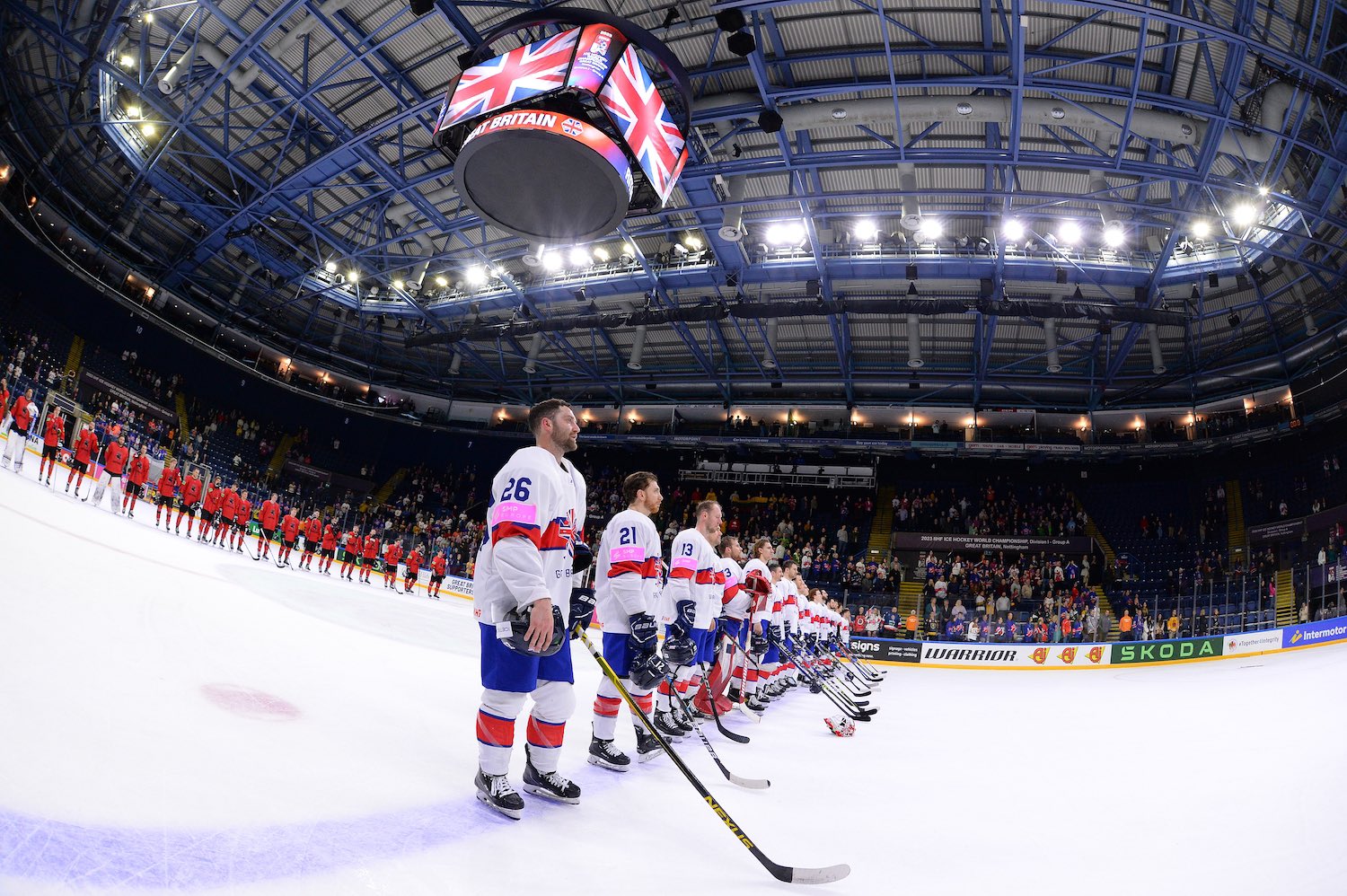
The acid test came in the final game of the tournament.
Great Britain needed to avoid a regulation defeat against Italy to claim promotion.
It was the kind of situation that previous incarnations of this team had ultimately failed in.
After a nervy first period in which Great Britain gave up an early lead, the hosts completely outplayed Italy in the middle frame. The fact GB only led 4-3 was down to a pair of defensive mistakes that otherwise blighted an excellent twenty minutes.
Two goals without a reply for Italy in the third period would have seen them promoted and Great Britain consigned to third place and disappointment.
It wasn’t the prettiest final frame performance by GB, but they dug in, restricting Italy to four scoring chances of note. Another case of substance over style, but the IIHF doesn’t hand out extra points for flamboyance.
An empty net goal by Cade Neilson sealed the victory, three points, a gold medal and a promotion.
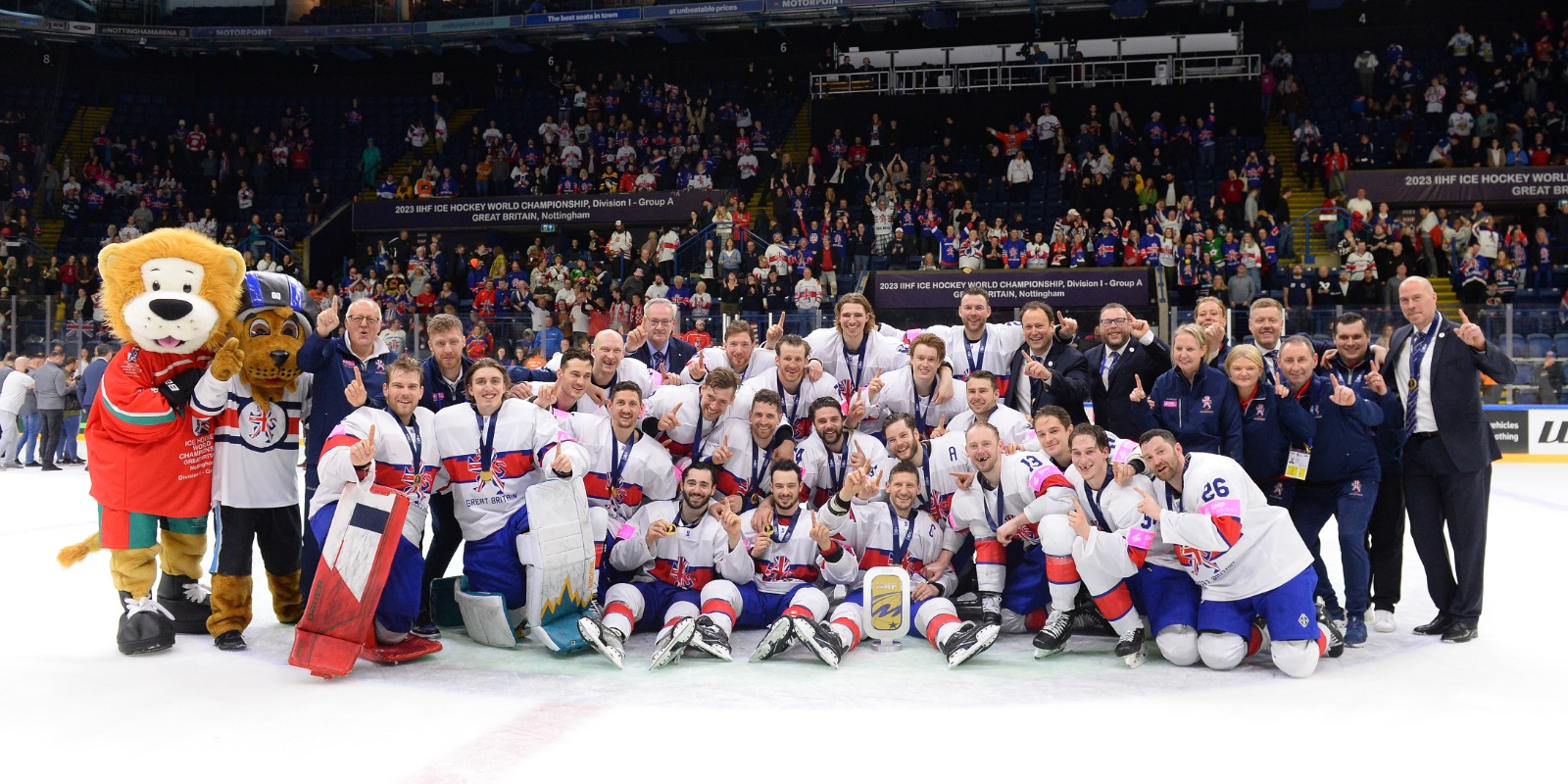
Great Britain will compete against the world’s best in Czechia next year.
It’s a testament to the men’s programme, the coaching staff and the current crop of players that this is now the expectation placed upon a nation for whom their profession is a minority sport in the UK.
Liam Kirk led Great Britain in scoring with ten points (3G/7A) and finished second in tournament scoring.
Cade Neilson led GB with five goals, good for second-best in the tournament.
There were contributions from all areas.
Evan Mosey and Nathanael Halbert produced a combined eleven points from the blue line.

Mike Hammond and Robert Dowd both recorded five points, while Brett Perlini hit the twine on three occasions.
Eighteen players recorded at least one point and twelve helped themselves to a goal or more.
Ben Bowns was named the best goaltender of the tournament. He led the way with a 1.39GAA, 93.46Sv% and three shutouts.

There were star performers allied with solid production throughout the line-up.
A luxury rarely enjoyed by Great Britain at this level in years previous.
To win all five games under intense scrutiny and pressure is quite an accomplishment for the current group.
Promotion to Pool A in this manner is a historic moment for British hockey and easily caps the most successful spell in modern history.
If you have enjoyed this article and would like to support my work please consider donating https://ko-fi.com/markukleaf or PayPal.me/markukleaf
No donation is too small, even if it’s just the cost of a coffee. It would be much appreciated.
Alternatively, if you feel inclined to support me longer term please consider becoming a patron https://www.patreon.com/markukleaf
Thank you for considering the above, reading this article and for your continued support.
 UK Hockey Blog