Heading into Group F of the Women’s Olympic qualification tournament, we know much about Great Britain’s squad.
But what about the three nations they’ll be facing in Nottingham across four days?
Slovenia
Slovenia’s women’s program has only been running for twenty years internationally.
Their first competitive game was a 12-0 reverse to Great Britain in 2001 but they’ve come a long way since.
At their peak, Slovenia has been ranked as high as 16th in the world.
In the most recent world championships (2019) Slovenia won Division 2A (in Scotland), earning promotion to Division 1B, though a lot has changed in the world since then.
Known as ‘Risinje’ (The Lynx), Slovenia has never yet qualified for an Olympic Games but will fancy their chances of creating history for themselves.
A balanced roster features just four teenagers and an average age of 24.
Pia Pren is a legend in Slovenia women’s hockey and the player to watch.
The thirty-year-old has accrued 349 points at the international level in just 66 games, including 178 goals!
Pren has spent her career playing in Austria and Sweden and has often won the best forward of the championship award when suiting up for Slovenia.
Not much is known about Arwen Nylaander, but the 15-year-old has signed with MODO Hockey in Sweden so is obviously talented and could prove a dark horse in the tournament.
Sara Confidenti is vastly experienced despite being the relative tender age of 23.
The forward has already spent time playing in Switzerland, Austria and Hungary.
A noted goalscorer, Confidenti has hit the twine on 102 occasions for her country in just 67 games.
Twenty-one-year-old netminder Pia Dukaric has spent time outside her native homeland in Austria and Finland. It’ll be a different challenger next after committing to Yale University for 2021-22.
Her international stats are hugely impressive with a purported save percentage of about .950 albeit with the caveat some statistics are absent according to Elite Prospects.
South Korea
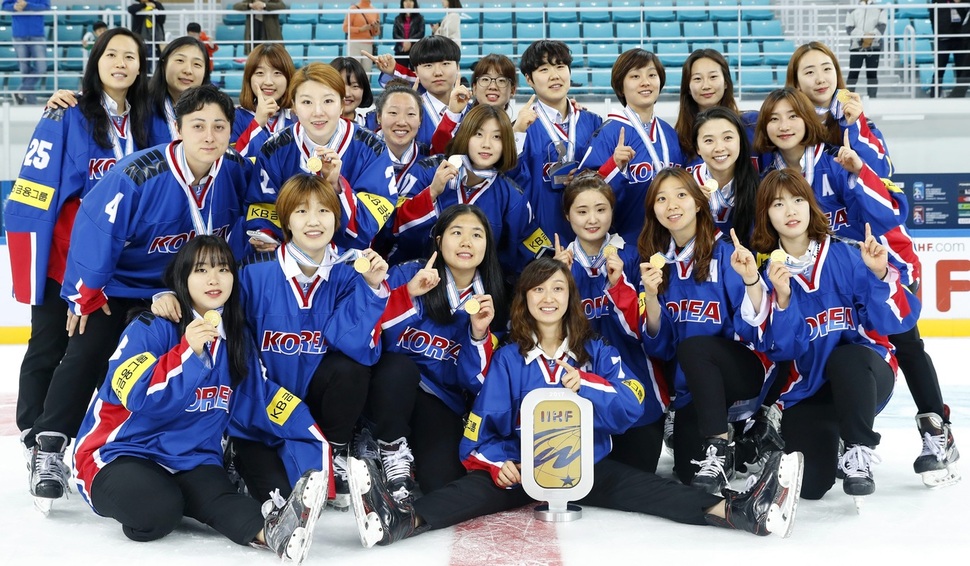
The Korean women’s national team was a representative side which is composed of players from both South Korea and North Korea.
The team was formed in 2014 as a response to the country winning the hosting rights for the 2018 Winter Olympics, competing as “Korea” for the first time at those games.
Korea lost all three games in their home Olympics, scoring just once and conceding twenty goals in defeats against Sweden, Switzerland and Japan.
They should be favourites to win the group as South Korea in this tournament, being the highest-ranked nation in the competition at 17th.
They are bringing a very youthful-looking roster to the UK, with an average combined age of under twenty.
Twenty-five-year-old defender Ye Eun Park is easily the most experienced of the group having played Canadian university hockey.
Another blueliner with North American experience is Seo Hyung Kwak.
The 19-year-old has played the previous six seasons in American junior leagues, starting on the west coast.
Iceland
Iceland will not be expected to pull up any trees in this qualification tournament.
Currently ranked 31 in the world, Iceland has never been higher than 29th since first competing in 2005.
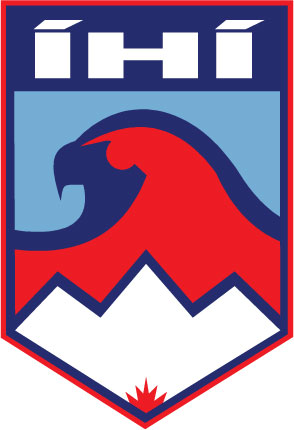
However, the team nicknamed Íslenska Falcons (Icelandic Falcons) do own one of the best and most unique association crests I’ve seen in a long time.
The nation has only 168 players to choose from according to their IIHF official profile.
Ten of their roster are teenagers, whilst at the other end of the scale, Steinunn Sigurgeirsdottir is the old-hand of the group at the tender age of forty.
Several players have experience outside Iceland, in primarily Sweden but also in Norway and the NCAA.
If you have enjoyed this article and would like to support my work please consider making a donation at https://ko-fi.com/markukleaf or paypal.me/markukleaf
Alternatively if you feel inclined to support me longer term please consider becoming a patron https://www.patreon.com/markukleaf
Thank you for considering the above, reading this article and your continued support.
 UK Hockey Blog